Entries Tagged 'General shaving chat' ↓

The global nature of real shaving kit

One of the really bad things about the multibladed system razors is that they try and force a communist like conformity. Supposedly we are all the same and must all use exactly the same pieces of equipment in order to shave. System shaving is living in a patent protected walled garden that has been engineered to maximise the profits of big global companies.

Traditional, real shaving is the exact opposite. An explosion of choice from all around the world so you can customise every pass in every shave to suit you. With such a diversity and quality of products that we are truly pampered. Yet because we are not paying for expensive patent protected monopolies the prices are far more reasonable.

Making most shaving equipment is not rocket science, the double edged safety razor has been around for over 100 years, so much of what we use can be made in the developing countries and/or by small artisan companies. In fact it is the developing countries where the vast majority of the world’s DE shavers reside. It is their use of this kit that creates the massive volumes that enable us to buy so much good stuff so cheaply.

And then there is the enormous globe shrinking power of the interwebs. The communication this provides mean that everybody in the world has the potential to have perfect knowledge all the time. This has powered the explosion in traditional shaving in the West. Anyone who is interested does not have to stumble alone in the dark, they can go online and share with tens of thousands of like minded others from all around the world. Not only that, it is so easy to buy and sell stuff virtually anywhere, shaving kit is mostly light in weight which stops the postal charges from being punitive and PayPal and credit cards ease transactions.

We are just so lucky, the world is our oyster and our playground in a way that previous generations would not have believed. So it would be churlish not to take advantage by experimenting with and buying from everywhere. So let’s go for a little trip to look at some of what is available (in no particular order).

United Kingdom. Lots of active companies, making some brilliant kit. Edwin Jagger razors are rightly very popular. Brushes also come from them and also from Kent, Rooney, Mason Pearson, Culmak etc. Some fabulous shaving creams and soaps come from the famous St James’s grooming brands and also from Mitchells’s Wool Fat, Castle Forbes, Body Shop, Creightons, Coates etc etc. A plethora of riches really.

Isle of Man. This small island nation in the middle of the Irish sea is of immense importance to traditional shavers because it is where the very best shaving brushes come from with the famous Simpson’s range. The company that make them also make the value oriented Vulfix brushes and own label brushes which are sold under the brand names of lots of different companies.

New Zealand. Earn a mention for their very nicely crafted Goodfella razor.

India. Home to hundreds of millions of traditional shavers it is hardly surprising that they are also home to two of the world’s biggest blade manufacturers Malhotra (Laser, Topaz, Vijay, Swish, Centwin etc) and Vidyut (Super-Max, Zorrick etc). It is also the home of Parker razors. But of most delight to Western customers is the plethora of fantastic, high quality shaving creams, the jewel in this particular crown is Godrej and most famously their Menthol Mist, something that really has to be tried.

Vietnam. Gillette have a factory here that makes DE blades. But what is really special are Kimson shaving brushes (that I have written about before) which are exquisite and beautiful handmade works of art made mainly from buffalo horn.

China. The other huge market in the world and even more prolific than India at manufacturing. They make lots of different razors, which I have written about elsewhere and have a bewildering array of razor blade brands. But their main claim to fame in the global real shaving market is badger hair shaving brushes. Badgers are conserved in the West but culled as vermin in China, so they have lots of badger hair to export. Being entrepreneurial, having cheap labour and access to the raw materials, much of this is sold as manufactured knots which are used by just about every brand of shaving brush in the world. Now, because of eBay, it is possible for individuals to buy brushes directly from China cutting out the middleman and the expensive brand names. So what was a very expensive luxury item for the elite can now be bought by anyone for just a few dollars. Something that some people are finding difficult to take on board.

United States of America. Home to the big global shaving companies, Procter & Gamble (Gillette) and Energizer (Schick, Wilkinson Sword, Personna etc) whose sheer marketing horsepower nearly eliminated traditional shaving. But the fight back is on with artisan companies producing razors, brushes and soaps/creams. However the biggest attraction of America for an international traditional shaving audience is as a source of vintage razors. Nearly all my classic Gillettes crossed the Atlantic in a Jiffy bag.

Australia. Like most countries Australia have their own shaving soaps and creams. But the real gem are the gorgeous Bryce artisan shaving brushes that are something special. You will find his account on eBay as “theshavingbrush”.

Spain. I have written about Spanish swag before, as a frequent visitor there I have had some good buys. Pre-eminent in many people’s eyes are the La Toja range of shaving sticks, shaving soaps, balm and after shave. Also Vie-Long are one of the world’s premier shaving brush manufacturers.

Portugal. Brought to our attention by the action of Semogue and their fantastic brushes and by Musgo Real shaving soap.

France. L’Occitaine and Pré de Provence soap, Joris razors and Plisson brushes are just typical of the French luxury goods industry. But there is excellent stuff at sensible prices, Monsavon shaving soap, for instance, is more than a bit special. And then there is Thiers-Issard a cutlery company who make Sabatier knives, cut throat razors and some of the very finest shaving brushes that money can buy.

Italy. Omega brushes are excellent and available worldwide, as are the soaps and creams of Cella, Valobra and Proraso which are world class.

Germany. A powerhouse in traditional shaving. Razors from Merkur have been the backbone of the movement for years and Muhle and Pils also make excellent razors. There are a plethora of blade manufacturers including Merkur (again), Apollo, Feintechnik, Souplex and Timor. Famous soaps include Tabac, Speick and Sir Irisch Moos and brushes come from Muhle, H L Thäter and shavemac.

South Africa. Here we have The National Match Company factory in Cape Town that makes double edged safety razors and the blades to go in them. Unfortunately they are little known of outside Africa.

Russia. Home to the factory that makes some of the best double edged blades that money can buy (but for how long?) with Petersburg Products International. Also there are Rapira blades from Moscow. But an area where Russia really shines, without most shaving enthusiasts realising it, is shaving creams. There are a huge range, all excellent. Tet-a-tet, Everest, Nord Ost, Phyto Expert, Svoboda and Comme il Faut are just some of what are easily available there but difficult to find here.

Thailand. Must be included for the excellent iKon razors, one of the best made in the world today.

South Korea. Home of Dorco razor blades and Tweezerman brushes.

Turkey. Traditional wet shaving is big here amongst their 73 million people so there is a lot that is made here including Derby and Bluebird blades, excellent Arko shaving soaps and Jaguar brushes. It is also an good place (alongside Spain) to buy horse hair shaving brushes.

Japan. Here are made some of the sharpest blades, Feather and Kai. Also Feather make the razors to put their blades in.

Egypt. In Alexandria is Lord who are one of the world’s big manufacturers of blades and razors which are sold under an array of different brand names and which are very widely exported.

Israel. Home of a big Personna blade factory that also produces under the Crystal brand name.

That is not the lot, obviously things like shaving creams and soaps are very easily made in just a kitchen, so they can be made just about anywhere. From my own experience it is well worth experimenting and trying the less well known, even if it takes a bit of effort to get hold of it. Some online lemmings deride the non mainstream, but that is their loss.

RAD, SBAD and other acquisition disorders

Shaving brushes by Vulfix, Simpson, Rooney, Omega, Semogue, Trumper, Edwin Jagger, Plisson, New Forest and Kent

Shaving scuttles overhead view

This gets discussed a lot in the traditional shaving community, mainly RAD (Razor Acquisition Disorder) and SBAD (Shaving Brush Acquisition Disorder), they are used self-deprecatingly to explain the growing piles of shaving kit that many have neatly organised in their shaving “den”. So what is going on here?:

  • Collecting things seems to be a male preoccupation, useless used postage stamps, camera lenses, music CDs etc. Many men seem to have many collection obsessions and at least the good thing about shaving kit is that some of it gets used every day.
  • Some of this stuff is very nice indeed from an aesthetic standpoint, Simpson’s shaving brushes for instance. It is not too difficult to see how people end up owning 30 or more different models.
  • The whole ethos of traditional shaving is that we have escaped from the patent protected walled garden of the big global shaving companies and have discovered choice. And the more kit we buy the more choice we have.
  • Most of this stuff is really good to use. Building a lather with a top end Simpson’s brush and Taylor’s of Old Bond Street Avocado shaving cream is pure, unmitigated, indulgent luxury. Enough to make you feel very sorry indeed for all those poor suckers who still get their lather out of an aerosol can.
  • Some vintage shaving kit is going up in value pretty quickly. Personna 74 blades and Eclipse Red Ring razors have rocketed in value recently for instance. So the more you have the more you make on your investment. Owning 100+ vintage Gillette razors can be justified on sound financial terms.
  • Keeping up with the community. If they are all discussing the latest New Forest or Semogue brush then you are a bit left out if you haven’t got one. This is why banning perfectly good vendors (Connaught, iKon, Frank Shaving, Nanny’s Silly Soap, New Forest Brush, etc etc) from forums is so bad for the members of that forum, they are deprived from discussing some of the best stuff out there. This is ungentlemanly.
  • It is so cheap and such good value. A Vulfix 404 brush, one of the best you can buy, is under £10, luxurious St James’s shaving creams are less than £7 for a big tub and blades are so cheap that it only makes sense to buy them in batches of 100 or more. Other hobbies can be a lot more expensive, try helicopter flying for instance.
  • Shaving acquisition disorders allow us to keep up with the women. For years they have had scores of mysterious bottles in their bathrooms and boudoirs, now we can get our own back. In fact it is good to compete with your significant other as to who can occupy the most shelf space.
  • Bragging rights, as in my daddy is bigger than your daddy. If someone has 30 Simpson’s brushes then someone else will soon pop up with 50, with pictures to prove their superiority.

Of course there is another side to this. Maybe sometimes there is a bit of sub clinical obsession creeping in. Nothing to worry about for the moment but it could get out of hand one day.

Your Milage May Vary YMMV

YMMV is not a very common acronym, yet it is widely used in the shaving community. The abbreviation stands for Your Mileage May Vary which means that you could have a different experience to someone else. It is often used in posts where the poster is expressing opinion about a product or technique and it is not too dissimilar in it’s meaning to the IMHO (In My Humble Opinion) acronym more widely used elsewhere on the interwebs.

It is hardly surprising that YMMV has become so popular when discussing shaving because very few daily activities can give experiences that vary so much from person to person, all you have to do is read the reviews for just about any piece of shaving equipment to see the huge variance of opinions that a simple item of kit can generate.

Of course this largely stems from escaping the patent protected walled garden of the big global shaving companies and their highly expensive multibladed cartridge based system razors. In the tradition shaving world we have infinite choice and anarchy reigns. It is fantastic but means that the only way you can express a valid opinion is by qualifying it, hence the value of YMMV.

One area where YMMV rules is razor blades, the experiences that different users have with a given brand are all over the place, and this variance isn’t just from user to user, it is also from razor to razor with the same user. So someone might prefer a KAI blade in their Merkur Slant Bar and a Bolzano in their Weishi. It is entirely up to them and their preferences and experiences. Hence the popularity of razor blade sampler packs that allow a shaver to try many different blades across their different razors.

Of course this high level of subjectiveness also extends to razors, brushes, creams/soaps and technique. Some products are particularly divisive: Mitchell’s Wool fat soap, Treet carbon steel razor blades, Boar brushes, Weishi razors and method shaving are just a few examples of this. The answer is simple, if you add YMMV to anything you write it will upset those who disagree with you less.

Human facial hair

Cross sectional diagram of human hair

I thought it would be interesting to take a look at what it is that we spend so much time and trouble (and with traditional shaving, enjoyment) cutting.

A hair shaft is a dead and quite complex structure made mostly from a protein called keratin, it is manufactured continuously (during the Anagen phase) by a small bulb like structure just under the surface of the skin called the follicle. The shaft has three main components, on the outside is the cuticle which is made of flat thin cells.  Next there is the cortex which is the most important bit which consists of bundles of strands of keratin, these give the hair its strength and they also contain the different forms of melanin that give the hair its colour. In the middle is an unstructured area called the medulla.

There are two different kinds of hair, Vellus hair is fine and is what women and children have on their faces, Terminal hair is caused by the action of androgen hormones starting at male puberty and are thicker, longer and darker, this is what we shave.

There is a huge variation in the diameter of human hairs from 17 to 180 µm (0.00067 to 0.0071 in), a ratio of more than ten to one, no wonder that is so much difference in people’s shaving experience. It also varies enormously in its growth pattern and density, not only from person to person but also in different areas of the same person’s face.

The hair density (hairs per square centimetre) of a beard is about double that of the same person’s scalp and about half of the body’s total number of hairs are on the head, a function of the need to provide more insulation for it. The beard grows very approximately 0.4mm per day, which is about 4 times the speed of fingernail growth. Shaving has no effect whatsoever on the rate of hair growth.

Hair readily absorbs water and as it does so it becomes weaker. When fully waterlogged, which takes several minutes, it loses about 80% of its strength. Which means that if you shave after a shower your blade will last five times longer than if your hair was not waterlogged at all.

Each individual hair has a growth cycle with distinct phases. The Anagen phase is when growth occurs, during the Telogen phase the hair is dormant. Different parts of your body have hairs with different growth cycles, which is why for instance eyebrows are shorter than scalp hairs. Hairs in the human beard also have different cycles lengths depending on where they are, the upper lip behaves differently to the chin which in turn differs from the cheeks. You can see this difference when someone grows a full, untrimmed beard.

All fascinating stuff and during a shaving lifetime you will cut through hairs a huge number of times. Just make sure you are not using a multibladed system razor or a lather generated out of an aerosol and then all that cutting will be far more pleasurable.

Exploring the science of shaving

Another old article, this time from Science and Mechanics in February 1957, but still interesting and relevant today. We still grow the same sort of stubble. You can read the article in a larger format as well as a transcript of it here.

Pogonotomy, pogonotrohpy, pogonophile, pogonophobe, pogonologist etc

Some long English words at the top there. I hope I get their meanings right. They all originate from the ancient Greek word pogon which translates as beard in English. It is the suffixes that create a whole pile of different meanings. Note that good words in English have a Greek stem and suffix/prefix or a Latin stem and suffix/prefix. Mixing the two with say a Greek stem and a Latin suffix/prefix is naughty. So pogonicle for a small beard wouldn’t really be on.

Pogonotomy. Tomia is the Greek word for cutting so what we literally have here is beard cutting, or what we call shaving.

Pogonotrohpy. Trophe is the Greek for nourishment. So what we have here is growing a beard, or not shaving.

Pogonophile. Philia is the Greek word for love. So this is someone who likes or is even obsesses about their beard.

Pogonophobe. Phobos is the Greek for fear or hate. So this is someone who has a dislike or irrational fear of beards.

Pogonologist and Pogonology. Logos is the Greek word to study. So here we have a beard expert and the science of studying beards.

Pogonic. Ikos is the Greek for pertaining to. So this is for anything related to a beard. This blog is pogonic.

Pogoniatry. Iatros is Greek for healer. So this would be the medical study of beards.

Pogonectomy. Ectome is the Greek for excision. So this would be the removal of a beard.

Enough. As you can see this is a simple game. Take any suffix in the English language that comes from ancient Greek and add it to pogon and you have a valid English word relating to facial hair. There are 102 Greek language elements here for you to have some fun with.

Even more fun, at the time of writing this there are a couple of valid English words that can only be found in this article on the whole interwebs thing.

My traditional shaving scuttle collection

Shaving scuttle collection on top of bookcase, where it lives

Shaving scuttles see the light of day

Well here are most of them in all their glory, just under 50 traditional wet shaving scuttles (in England there are often called shaving mugs). And the funny thing is that I don’t want them, well at least not most of them. They were bought at a time of great enthusiasm, but I don’t use them because for me face lathering works best. So they are up for grabs, preferably as swaps for something I would like and use.

Shaving scuttles right hand view

Shaving scuttles left hand view

They are are English china (with the odd exception) without major chips or cracks. But these are used, vintage items and their condition may reflect this

Shaving scuttles overhead view

A closer view of a few selected shaving scuttles

If you are in London on the 22nd. Discounts at Truefitt and Hill (also online)

I have written here before about the famous grooming shops in St James’s in London and especially the three “Ts” of Trumpers, Taylors of Old Bond Street (TOBS) and Truefitt and Hill (T&H) who sell some of the very best shaving products available. These products are sought after and sold worldwide making them one of the cornerstones of the resurgence of traditional shaving.

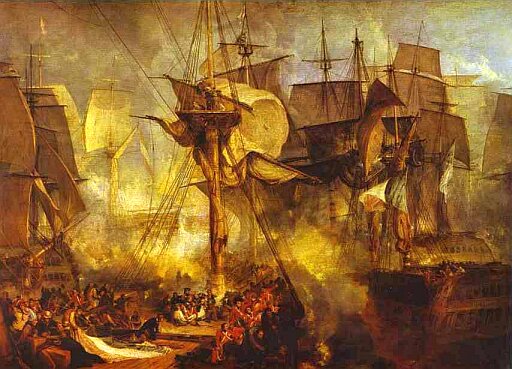
T&H have a long history going back over 200 years and during that time their clients have included many of the rich and famous including Sir Winston Churchill, John Wayne, Prince Charles, Michael Schumacher and Frank Sinatra. Their current London premises (they have had several over 200 years) is at 21 St. James Street in London. And every year they have an anniversary celebration. This year it includes a 30% discount on their Trafalgar range as you can see:

Energizer buys American Safety Razor Company

In an auction in Delaware, USA, last week Energiser bought the bankrupt American Safety Razor Company for just $301 million. You may be wondering how this effects you.

American Safety Razor has a history going back to 1875, over a quarter of a century before Gillette, when the Kampfe brothers produced the Star which was the first safety razor made in the USA. It owns about 30 brands including Magnum, X5, Matrix3, Mystique, Pal, Solara, Burma Shave and Personna and is the fourth largest manufacturer of shaving products in this market. It has been reported that the final straw that forced them into bankruptcy was losing the Walmart contract. Ironically it was won off them by Wilkinson Sword, which is owned by Energizer.

Energizer are a global consumer products company that includes Energizer batteries Playtex feminine protection and both Schick and Wilkinson wet shaving products. They have commercial and production operations in 49 countries and distribution in another 131 countries. And are number two in the USA shaving market but still only a fraction of the size of Gillette.

The history of all the shaving brands consolidating then consolidating again comes from their inability to compete with Gillette. Now, with this latest consolidation, there are even more brands under the same roof. Will this enable them to compete more effectively with Gillette? I doubt it, I see the threat to Gillette’s position coming out of China or India. Already Super-Max of India is the second biggest manufacturer of razor blades in the world.

When it comes to we traditional, double edged (DE) razor users the Energizer takeover could go one of three ways. The worst for us is if they concentrate on system razors, ruthlessly taking on Gillette, turning all their manufacturing and marketing over to doing so. This makes the most sense for them in terms of creating profitability. The second option is to continue with the current muddle, with fragmented brands and products. The best option for us is if they drive the different brands hard into different market segments and they regard DE shaving in the West as being one of those segments.

So if there is a DE blade that you particularly like that is marketed as one of their many brands then it might be worth buying a few hundred, just in case.

The international kit swapping scene

As I have pointed out many times a huge part of the joy of real shaving is the immense diversity of goods available from all over the world. This morning I used a British brush to make a lather with a French soap then shaved with an Egyptian razor containing an Indian blade and finished off with a Spanish shaving balm. All this is perfectly normal as shavers pick and choose what they want to use totally regardless of its nation of origin.

Of course it is impossible to physically go shopping in all these countries which is why the invention of the interwebs has been so good. Now specialist vendors in Britain can offer an amazing variety of goods from all over the world. Just look at the shaving creams and blades on offer at Connaught Shaving, for instance. Then there are the online vendors in other countries who will mail stuff here, then there is eBay and so on. The world really is our oyster and it is a massive adventure exploring the shaving products it has to offer.

But even with all of this there are still things that are difficult to get hold of and this is where the international fraternity of traditional shavers shows its value. There are things available in Britain, like Palmolive shaving sticks, that are excellent and highly desirable yet which are unavailable in many countries. So the scene is set for an international swap. And with many of these things the postage costs more than the goods being sent. So it is the camaraderie and mutual help that matters far more than the value of the transaction.

So here are some of the goods I have been sent from abroad by way of swaps:

  • Williams mug shaving soap. Van Der Hagen deluxe shave soap. Low cost American standards. It is difficult to relate to the American shavers in the online community if you don’t know about these products.
  • Ace fogless shower mirror. This clever and simple device transforms shaving because you can see your face in the shower. But it seems to be only sold in America.
  • European shaving soap sticks. Speick, Irisch Moos and Tabac, plus a bowl of Monsavon soap. A parcel full of classics.
  • Shea Moisture ultimate shave brush. This has been causing a bit of a sensation in America that such a good brush can be sold so cheaply. Unfortunately it is only available at Target stores or by mail order within America from Shea Moisture.

I hope the recipients of the goods I swapped are as happy with the transactions as I have been, certainly it is an interesting and social manner to expand the variety of what can be enjoyed.

online poker
SuperSignupBonus